10th International Conference on Bio-based and Biodegradable Polymers

Important dates
Main lectures
Invited lectures
Prof. Francesco Paolo La Mantia.
"Sustainable polymers in the agro-industrial chain"More info
Professor Emeritus University of Palermo
Full Professor of Polymer Technology and Recycling of Plastic Materials
University of Palermo and INSTM
Rheological and mechanical properties of polymer systems; processability, characterization and compatibilization of polymer blends; liquid crystal
polymers; nanocomposites; biodegradable polymers; plastics recycling.
Author of about 410 scientific papers (Scopus - Citations 10760, h = 50), four books, book chapters, teaching books. About 500 communications at
National and International conferences, about 50 technical papers and about 30 patents. Many invited plenary lectures at National and International
conferences. Since 2021, he has been included in the Stanford University ranking among the TOP 2% World Scientists.
Principal Investigator of national and International research projects
Chairman of National and International conferences
President of the MoDeSt International scientific society
Section Editor-in-Chief of two Sections of Polymers
Associate Editor of Frontiers in Materials
Member of the Editorial Board of International Peer Reviewed Journals, such as Polymers and Polymer Degradation and Stability
Prof. Luc Averous.
"A personal journey through several decades of research on starch-based materials"More info
Prof. Luc Avérous, from the University of Strasbourg (France), heads a Joint Research Laboratory in partnership with Soprema Group. Over the last 35 years, his research has focused on Polymer Sci. and Eng.His main projects have dealt with biobased, sustainable, and/or biodegradable polymers for environmental and biomedical applications. As a leading international expert in these fields, he has developed strong collaborations with several foreign labs (Australia, Latin America, Canada, EU) and major companies, including Tereos, Stellantis, Peters Surgical, Veolia, and Sartorius. He serves as a member of research advisory boards for companies and institutions. He has co-edited 4 books, published 40 book chapters, 15 patents, and more than 250 articles (Orcid N°: 0000-0002-2797-226X).
Prof. Maria Chatzinikolaidou.
"3D Bioprinted interfacial tissues using multifunctional, biomimetic biomaterials".More info
Prof. Maria Chatzinikolaidou, FBSE, FTERM, FIAMBE, is a Professor of Biomaterials in Bioengineering at the Department of Materials Science and Engineering, University of Crete, and affiliated faculty member at the Foundation for Research and Technology-Hellas (FORTH). Her research activities focus on the development of biomaterials and scaffolds, and on the biofabrication of complex constructs and pathophysiological models for tissue engineering applications.
Keynotes lectures
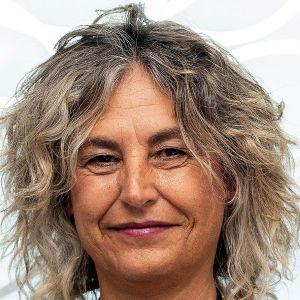
Prof. Koro de la Caba.
"How to design materials based on proteins and polysaccharides for healthcare applications"More info
Koro de la Caba is Full Professor at the Chemical and Environmental Engineering Department in the University of the Basque Country. She is head of BIOMAT group and her research focuses on various aspects of materials, especially proteins and polysaccharides, including valorisation, modification, manufacture and characterization, with the aim of contributing to the development of competitive and sustainable processes and products for applications in diverse sectors, such as environmental remediation, food, pharmaceutics, and tissue engineering.
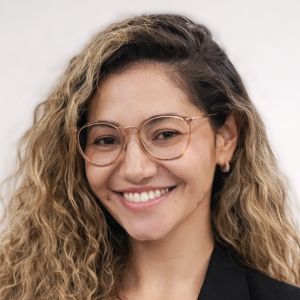
Dr. Patricia Marques de Farias.
"Babassu mesocarp-derived moisture-resistant films via hydrothermal pretreatment and stearoyl chloride grafting"More info
Dr. Patricia Marques de Farias is a CAPES–Alexander von Humboldt Postdoctoral Researcher at the Sustainable Packaging Institute - SPI, Albstadt-Sigmaringen University, Germany. She holds a Ph.D. and M.Sc. in Food Science and Technology from the Federal University of Ceará (Brazil), with a sandwich doctoral period at The Ohio State University (USA), a partnership with the University of São Paulo (USP), and specialization training at the Université de Lorraine (France). Her research focuses on the development of bio-based, active, and sustainable casting films for food packaging applications, with a particular interest in underexplored renewable feedstocks, such as cactus-derived polymers and babassu mesocarp flour. She has international experience spanning academic research, student supervision, and industry.
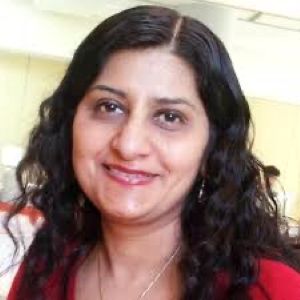
Prof. Ipsita Roy.
"Natural and Sustainable Polymers of Bacterial Origin and their Biomedical Applications".More info
Professor Ipsita Roy, Professor of Biomaterials, School of Chemical, Materials and Biological Engineering, Faculty of Engineering, University of Sheffield, is an expert in microbial biotechnology, natural biobased materials, and their biomedical and environmental applications. Professor Roy was awarded the prestigious Inlaks Scholarship to study for her Ph.D. at the University of Cambridge, UK. Her postdoctoral work was at the University of Minnesota, USA. She has published over 200 papers in high ‘Impact Factor’ journals and has an H index of 54. She is a fellow of the Royal Society of Biology and the Institute of Materials, Minerals and Mining (IOM3). She has a spin out company called PHAsT, focused on the production of medical grade PHAs for biomedical applications.
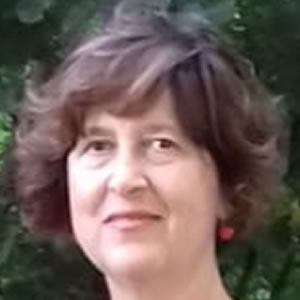
Prof. Elisabetta Ranucci.
"α-amino acid derived polyamidoamines as flame retardants for cotton".More info
Elisabetta Ranucci is Full Professor of Industrial Chemistry at the University of Milan, where she teaches polymer
science courses across all degree levels. She previously held academic positions at the University of Brescia and at KTH Royal Institute of
Technology (Stockholm, Sweden).
Her research focuses on polymer science, with particular expertise in the synthesis of multifunctional polymers for a wide range of applications.
These include bioactive polymers for nanomedicine, bioinspired polymeric flame retardants and photostabilizers, composite resins for heavy metal
ion adsorption, composite hydrogels for tissue regeneration, materials for Cultural Heritage preservation, and polymers derived from renewable
resources.
She has coordinated several national and international research projects and has served as an external referee for Starting and Consolidator Grant
applications. She is currently a member of the National Scientific Habilitation Committee (MUR) for the Industrial Chemistry sector.
She has also chaired the international congress Milan Polymer Days, held in Milan from 2017 to 2026.
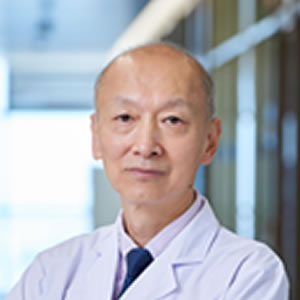
Prof. Jiang Chang.
"Bioactive ceramic/polymer composites for tissue regeneration and disease therapy".More info
Professor of Wenzhou Institute, the University of Chinese Academy of Sciences and the Biomaterials and Tissue Engineering Research Center of the Shanghai Institute of Ceramics, Chinese Academy of Sciences, Fellow of International Union of Societies for Biomaterials Science and Engineering (FBSE), Fellow of Royal Society of Chemistry (FRSC), and Fellow of American Institute of Medical and Biological Engineering (AIMBE), Fellow of the Chinese Society for Biomaterials. Vice president of the Interdisciplinary Research Society for Bone and Joint Injectable Biomaterials (GRIBOI). His research focuses on bioactive materials including bioceramics and polymer composites for tissue engineering and disease therapy.
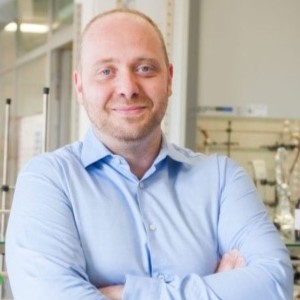
Prof. Lorenzo Guazzelli.
"Ionic liquids or deep eutectic solvents: which is the best choice for the valorization of biopolymers?".More info
Lorenzo Guazzelli is full Professor in Organic Chemistry at the Department of Pharmacy, University of Pisa, where
since May 2019 he has been leading the Ionic Liquids group (rtil.it).
He obtained his PhD in Chemistry at the University of Pisa, then he moved to University College Dublin, Ireland, for 5 years as post doc, where he
was recipient of a Marie-Curie Intra-European Fellowship for Career Development. He then returned to the university of Pisa, Department of Pharmacy,
where he currently is the vice-director, first as researcher, then as associate Professor and since 2024 as full professor.
The research interests initially focused on carbohydrate chemistry, including the elaboration of simple sugars, the synthesis of analogues endowed
with biological activity, and multi-step preparations of oligosaccharide fragments of the polysaccharide capsule of a pathogenic fungus. From the
very beginning, however, there was also a strong interest in exploring the potential of sugars to address environmental challenges, particularly
through the synthesis of glyconjugate analogues of commercially available azo dyes.
Then his research activity expanded to the development and use of ionic liquids, deep eutectic solvents, and bio-based organic solvents within a
green chemistry framework, also leveraging previous expertise and the opportunities offered by the use and modification of (poly)saccharidic
compounds.
A further research interest is devoted to the production of “platform chemicals” from sugars or to their modification using non-traditional
solvents.
More specifically, within the field of green chemistry, the main research lines of interest include: the synthesis and characterization of ionic
liquids from natural sources; the application of bio-based and chiral ionic liquids; the use of ionic liquids (a) in the modification of natural
polymers to obtain new materials or high value-added compounds, or (b) in the development of sustainable processes; the preparation and study of
ionic liquids for biomedical applications; the development and characterization of deep eutectic solvents for enantiodiscrimination studies, as
solvents for organic reactions, and for the extraction of high value-added substances; and the preparation and use of bio-based organic solvents
in organic reactions.
To investigate the many aspects related to the properties and applications of these non-traditional organic media, the Ionic Liquids Group benefits
from numerous national and international collaborations.
He is co-author of 134 papers in peer-reviewed journals, 6 book chapters, 3 patents, H-index 31 (Scopus).
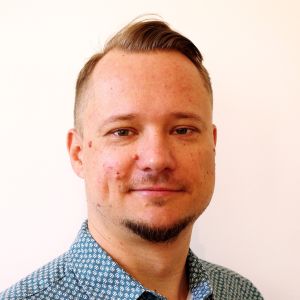
Prof. Balazs Imre.
"Plant protein-based nanocarriers: design principles and emerging applications".More info
Balázs Imre holds a PhD in chemistry and conducts research on bio-based polymers and sustainable materials at HUN-REN Research Centre for Natural Sciences and Budapest University of Technology and Economics, actively developing and implementing collaborative international projects. To extend beyond academic research, he established and leads the SUM Institute, an independent think tank dedicated to sustainable materials R&I. In the BIOEAST Initiative, Balázs coordinates the Hungarian BIOEAST HUB, as well as the Thematic Working Group on Advanced Biomaterials. He is a member of the SCAR Bioeconomy Strategic Working Group and one of the principal organisers of the series of international conferences on Bio-based Polymers and Composites (BiPoCo).
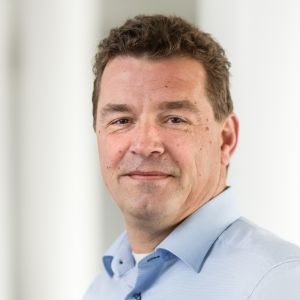
C.A.P. (Kees) Joziasse, PhD.
"Pushing the boundaries of PLA in foam and nonwoven applications".More info
Kees Joziasse studied chemical engineering (MSc) at the Faculty of Chemical Technology and Material Science at Delft University. He obtained his doctorate at the Polymer Laboratory of the Faculty of Chemistry, University of Groningen. After working for Royal Philips Electronics and Havells India Ltd in various global roles in different countries, in 2010 he joined Corbion, and since March 2017 is part of the joint venture between Corbion and TotalEnergies, where he has a global responsibility for technology and IP (PLA polymerization technology) and product & application development, including compounding, injection molding, film blowing, fiber spinning, sheet extrusion and thermoforming. He is the current VP of Research, Development & Technology in TotalEnergies Corbion.
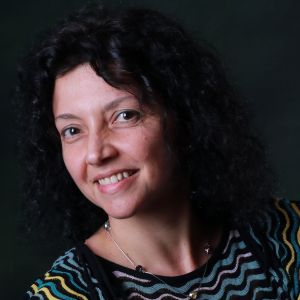
Prof. Serena Danti.
"Piezoelectric polymers and nanocomposites: from energy harvesting to biological transducers".More info
Prof. Serena Danti is Associate Professor at the Department of Civil and Industrial Engineering, University of Pisa (UNIPI), focusing her research interest on bioactive and smart biomaterials for biomedical applications using electrospinning and 3D printing. Prof. Danti received her M.S. in Chemical Engineering at UNIPI; later, she was a scholar research associate at the Centre for Excellence in Tissue Engineering, Rice University, Houston TX, and received her Ph.D. by the Faculty of Medicine and Surgery, UNIPI. She was a Post Doc at the Centre for the Clinical Use of Stem Cells. Since 2010 she is Team Leader of Otologic Bioengineering laboratory (OtoLab) at Cisanello Hospital in Pisa. She is co-funder of Onaya Biotech S.r.l., a start-up on cancer-on-chip platforms.